
Ashley Biden Files For Divorce From Husband After 13 Years
Ashley Biden, the daughter of former President Joe Biden, has filed for divorce from her plastic surgeon husband, Dr. Howard Krein, after over 13 years of marriage, according to court records.

The 44-year-old ex-first daughter filed the paperwork in Philadelphia’s Court of Common Pleas on Monday, according to The Post.
Biden’s Instagram post on the same day showed a photo of her walking through a park and flashing a thumbs up, set to the tune “Freedom” by Beyoncé.
She also posted a quote that read, “New life, new beginnings, means new boundaries. New ways of being that won’t look or sound like they did before.”
The cause of the separation was not immediately obvious. Divorce records are not made public in Philadelphia. Two years after her late older brother, Beau Biden, introduced them, Biden and Krein tied the knot in Greenville, Delaware, in June 2012.
Ashley acknowledged her wedding on the national stage while presenting her father at the Democratic National Convention last year.
“At the time, my dad was vice president, but he was also that dad who literally set up the entire reception. He was riding around in his John Deere 4-wheeler, fixing the place settings, arranging the plants, and by the way, he was very emotional,” she told the crowd.
Joe Biden himself is also facing brutal news this week.
House Oversight Committee Chairman James Comer says his investigation into Joe Biden’s mental decline could be used to challenge some of the former president’s pardons and executive orders, arguing staff have failed to prove Biden knew what he was signing in his final months in office.
The Kentucky Republican told “Just the News” that Biden’s frequent use of the autopen raises serious legal concerns.
“It’s questionable whether or not it’s legal to use an autopen on a legal document, but what’s not questionable is if the President of the United States had no idea what was being signed with using the autopen in his name,” Comer said. “Then, you know, that’s not legal. We could see criminal charges against some.”
Comer said his committee’s evidence could also be used to call into question some of Biden’s clemency acts, noting that the president’s poor summer 2024 debate performance “gave rise to questions about his mental capacity.”
Biden dropped out of the race one month later and endorsed Kamala Harris.
“I think at the end of the day, our investigation … could be used as evidence in trying to overturn some of those pardons and some of the executive orders, because the autopen was used so frequently … after that debate,” Comer said.
Former Harvard Law professor Alan Dershowitz told Just the News in March that such challenges would “end up in court.” He explained there would be two main issues: “One, the nature of what was signed – was it a pardon, or was it a bill from Congress, for example. And second, the nature of the autopen.”
Dershowitz said the Constitution states of bills: “‘If he approves, he shall sign it.’ So it says, ‘sign it.’ Sign it. So an autopen would raise a real problem if he signed it by autopen, which is not a real signature.”
On pardons, he said, “it will still raise the issue: Did he actually pardon? Or did somebody else just write the signature without really getting approval from President Biden?”
Biden’s first debate of the 2024 campaign season was described as “halting” and “disoriented,” with former Obama adviser David Axelrod saying, “I think there was a sense of shock actually, how he came out at the beginning of this debate… I think the panic had set in.”
Republicans had long questioned Biden’s mental capacity.
Special Counsel Robert Hur’s February 2025 report on Biden’s handling of classified documents noted he “would likely present himself… as a sympathetic, well-meaning, elderly man with a poor memory.” Hur said Biden could not recall the years he was vice president or the year his son Beau died.
Last month, Biden defended his decisions regarding pardons to The New York Times, stating, “I made every decision” on pardons; however, aides confirmed that he “did not individually approve each name for the categorical pardons.”
Kash Patel Collapses in Court as Jury Delivers Guilty Verdict on Every Count

In a dramatic and tension-filled scene straight out of a political thriller, former government official Kash Patel collapsed in federal court on Tuesday afternoon as a jury announced guilty verdicts on all counts in his high-profile fictional trial. The packed courtroom, already brimming with anticipation, erupted into gasps as Patel fell backward into his chair moments after the foreperson delivered the final guilty count.
Patel, who had been stoic during most of the six-week-long fictional proceedings, visibly trembled as the verdicts were read. According to observers, he clasped his hands tightly, his jaw clenched, and his eyes fixed on the jurors. But as the twelfth count was announced, witnesses say his face went pale, his posture collapsed, and marshals rushed to support him before he hit the floor.
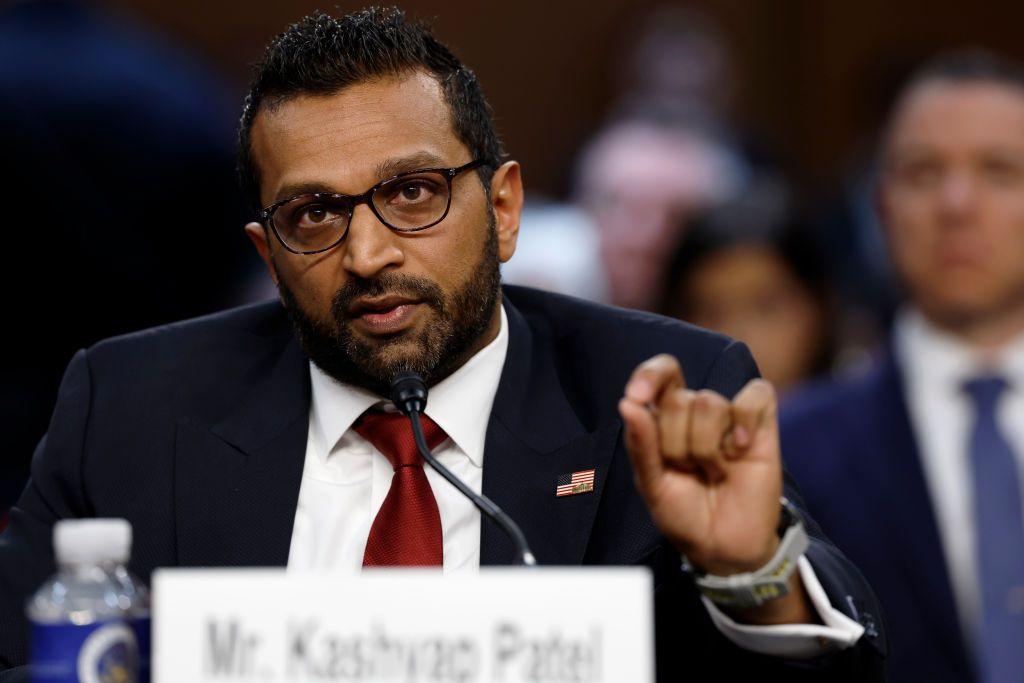
The presiding judge immediately called a recess while medical personnel entered the courtroom. Patel regained consciousness within minutes and was escorted to a private conference room for evaluation. Court officials later confirmed that he was stable and cleared to return for post-verdict proceedings.
Throughout the fictional trial, Patel had faced a barrage of allegations involving misuse of authority, obstruction, and improper handling of classified information. Though Patel’s defense team argued fiercely that the charges were politically motivated and that the evidence was circumstantial, the prosecution presented a narrative of deliberate misconduct and a pattern of behavior that they said undermined national security protocols.
The jury deliberated for just under two days before reaching a unanimous decision on every count—a speed that stunned both legal analysts and political commentators. “A clean sweep like this is extremely rare,” said fictional legal expert Dr. Elaine Foster. “It suggests the jury found the prosecution’s case not only compelling but overwhelming.”
Outside the courthouse, reactions split sharply along political lines. Supporters gathered on one side of the street, many expressing disbelief and anger, chanting that Patel had been targeted due to his past roles in government. On the opposite side, critics celebrated the verdict as a victory for accountability and the rule of law.
Patel’s defense attorney, Marcus Delgado, spoke briefly to the press after the verdict, calling the trial “deeply flawed” and announcing that they would file an appeal immediately. “Mr. Patel maintains his innocence,” Delgado insisted. “We believe significant errors were made in both the evidentiary rulings and the jury instructions.”
Inside the courtroom, the prosecution expressed relief that the process had concluded. Lead prosecutor Sandra Whitman stated, “Today’s verdict reflects the strength of our institutions and the dedication of the jury to fairness and truth.”
Sentencing is scheduled for next month, with Patel potentially facing decades in prison if the judge upholds the jury’s findings. As he left the courthouse under the escort of U.S. Marshals, Patel appeared weakened but composed, whispering to reporters, “This isn’t over.”


